Astronomical Mechanism
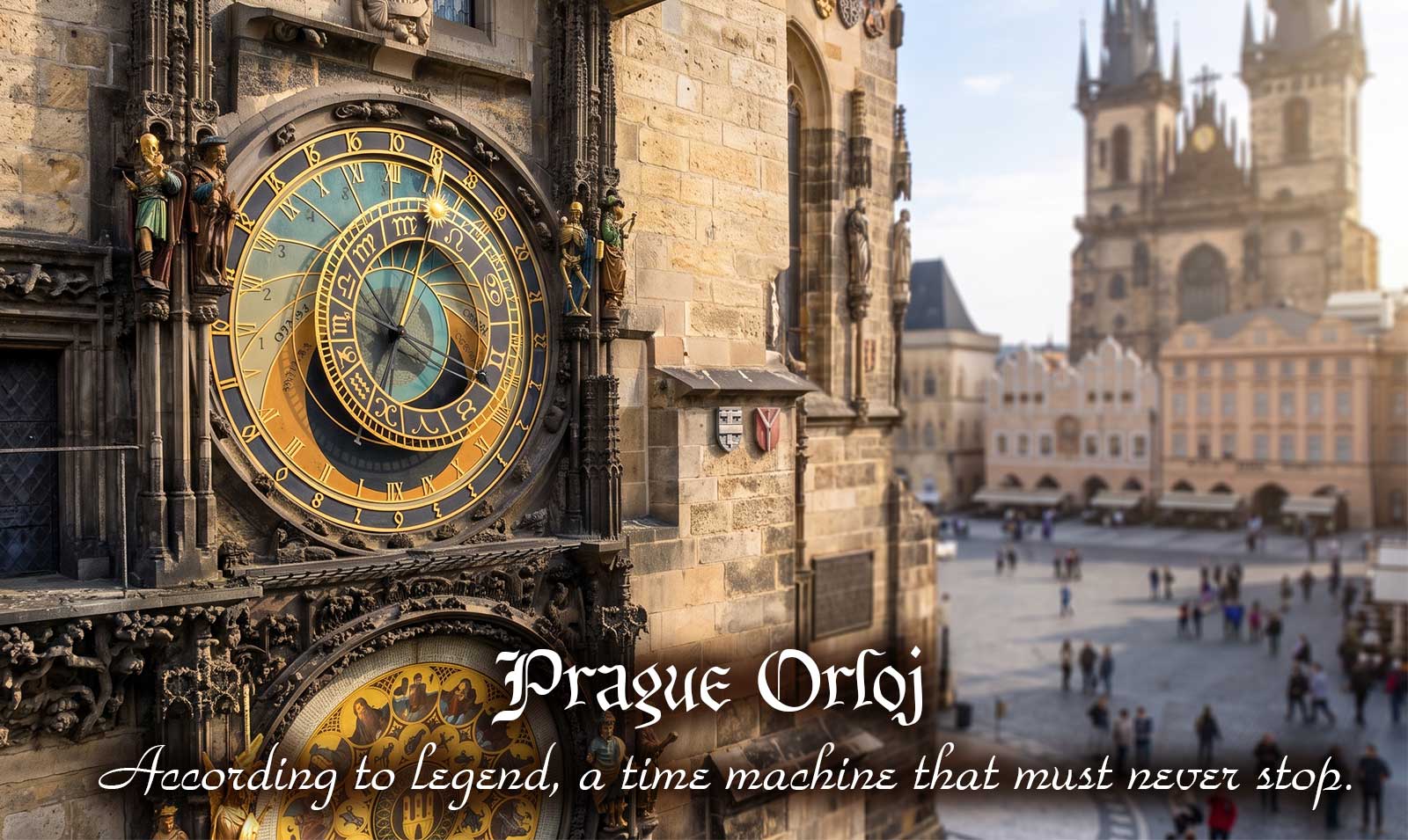
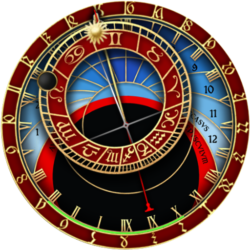
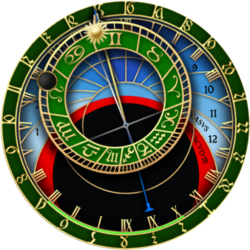
The heart of the astronomical clock is its astrolabe dial. It displays far more than ordinary time, combining the apparent movements of the Sun and Moon with the zodiac and other astronomical information.
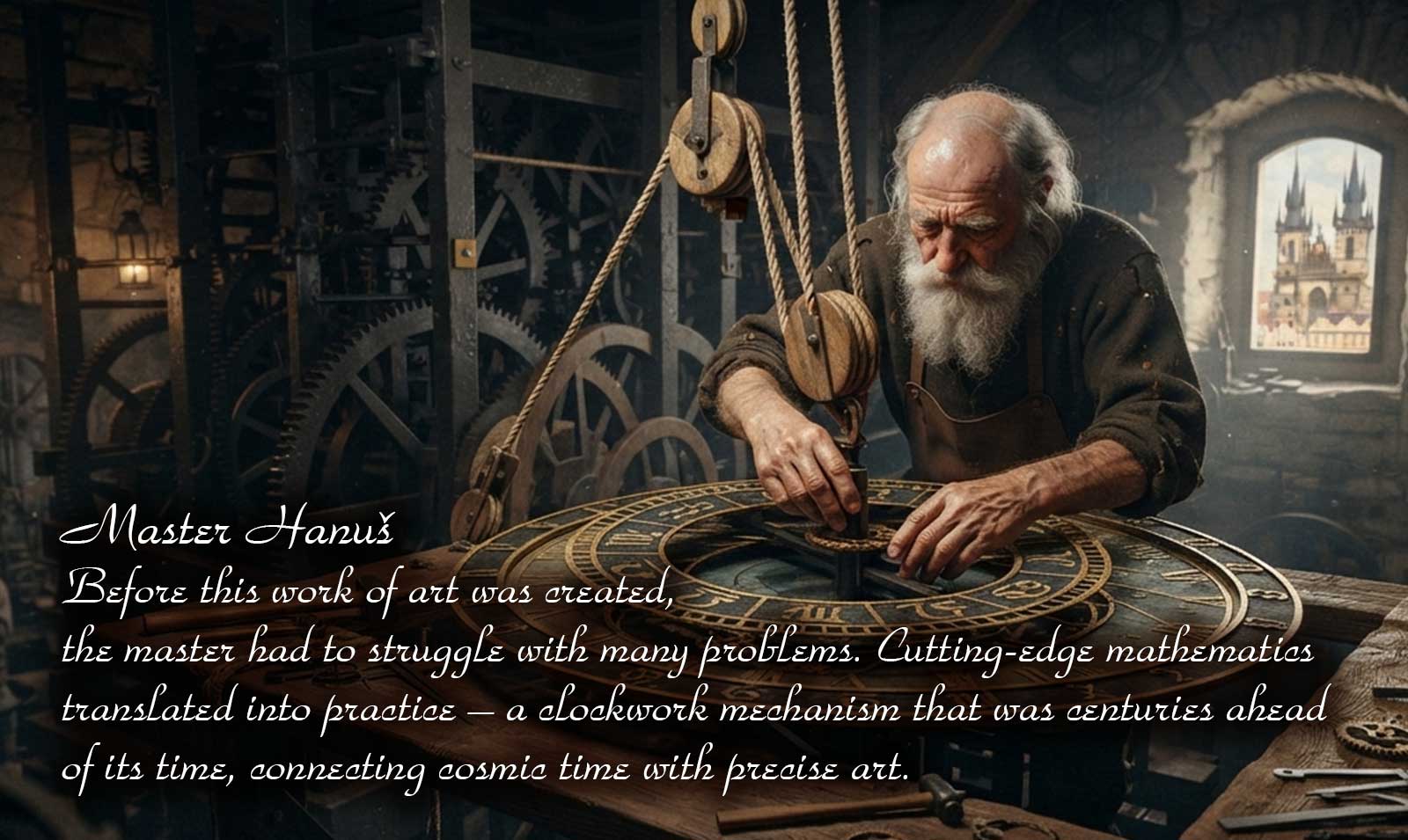
The historical mechanism had to ensure that its individual components moved in precisely defined ratios. This required a sophisticated system of mechanical gears and transmissions, with different rotational speeds corresponding to different astronomical and time cycles.
Various forms of time and motion therefore meet on a single dial. Some elements follow the daily cycle, others represent astronomical movements, while others correspond to annual, calendar, or zodiac cycles.
It is remarkable that this entire system was created in an era when the only „processor“ available was human knowledge, mathematical calculation, and mechanical engineering.
Mechanics Instead of Electronics
Today, it is natural to expect a complex device to be controlled by a computer. The astronomical clock, however, operates according to a fundamentally different principle.
Every movement must be physically generated by the mechanism. If one wheel is required to complete a rotation within a particular period while another must move at a different rate, the relationship between these cycles has to be created through carefully calculated gear trains and mechanical transmissions.
The result is a fascinating form of mechanical computation.
The gears do more than simply form part of the clock. Together, they embody mathematical relationships between different time and astronomical cycles.
The mechanism transforms the continuous motion of the clockwork into a multitude of precisely related movements that represent time and astronomical phenomena on the dial.
From Mechanical Clock to Digital Model
Modern technology allows us to recreate principles that would have been unimaginable to the original creators of the clock.
A digital system does not need hundreds of mechanical components to reproduce the relationships between astronomical cycles. It can mathematically calculate the positions of the Sun, Moon, zodiac ring, and other elements and display them directly on a digital screen.
However, this does not have to be merely a graphical imitation.
A digital astronomical clock can reproduce the underlying concept of the original mechanism.
Algorithms replace physical gears. Digital elements replace mechanical shafts and wheels. Astronomical positions that were once represented through carefully calculated mechanical transmissions can now be calculated directly by the device.
The technology has changed, but the fundamental principle remains similar:
Time creates motion, and motion creates a visible representation of the astronomical world.
From Gears to a Processor
The Prague Astronomical Clock is a remarkable example of how the same fundamental idea can be translated across completely different technologies.
In the past:
Clockwork → gears → mechanical transmissions → astronomical dial
Today:
Processor → mathematical calculations → digital movement → smartwatch display
The result may look entirely different, but the core idea remains the same: to represent the passage of time and the movement of celestial bodies through precisely defined relationships.
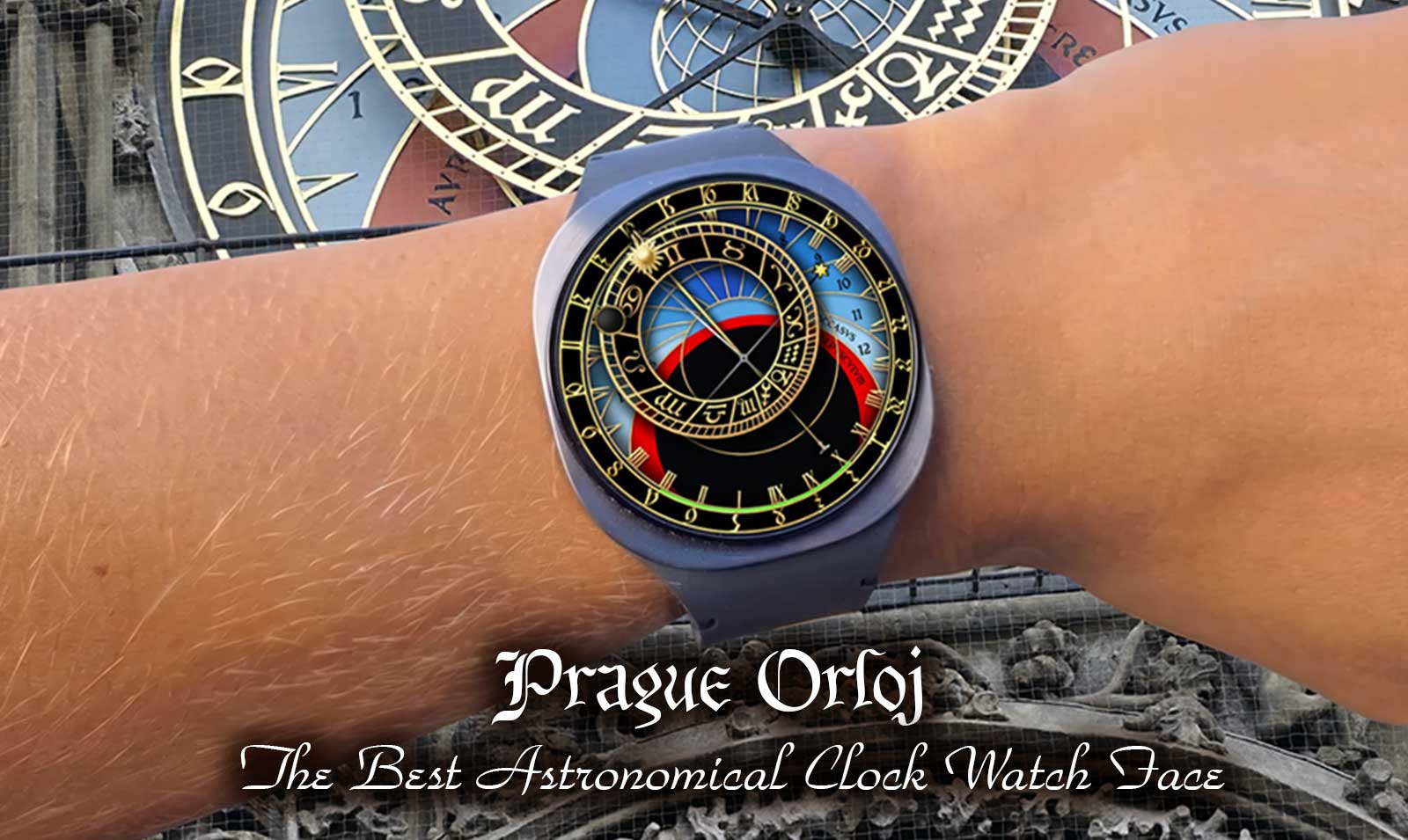
This is precisely the principle on which this digital watch face is based.
Astronomy Directly on Your Wrist
Bring one of the world’s most famous astronomical monuments directly to your wrist.
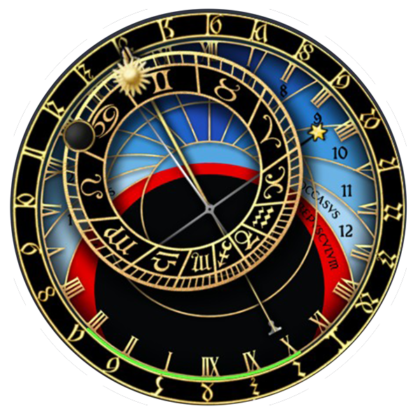
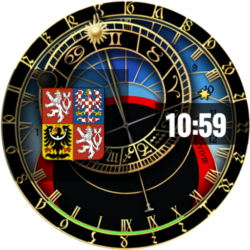
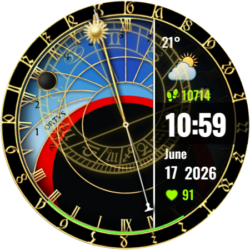
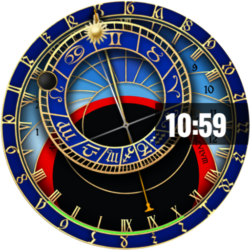
This watch face is a digital interpretation of the Prague Astronomical Clock, combining its historical astronomical principles with modern smartwatch technology.